
Memes and Metrics: New Tools for Investor Relations

April 25, 2026

How do you hold shareholder confidence when revenue flatlines by design?
For a newly listed startup (Company Y) shifting focus from growth to profitability, stagnant revenue may sometimes be a strategic choice. However, not all shareholders see it that way; some see flatlining revenue numbers and view them as a warning sign. Left unaddressed, this misinterpretation could become a confidence problem.
Here’s a story to illustrate the point.
From: Fixating on Revenue Stagnation
As operating costs climbed in 2023, Company Y deployed AI-driven automation to rebuild on a more efficient foundation.
Because heavy capital expenditure (CAPEX) had constrained growth marketing spend, revenue flatlined for the next two years. To most retail investors watching the top line, this probably looked like stagnation.
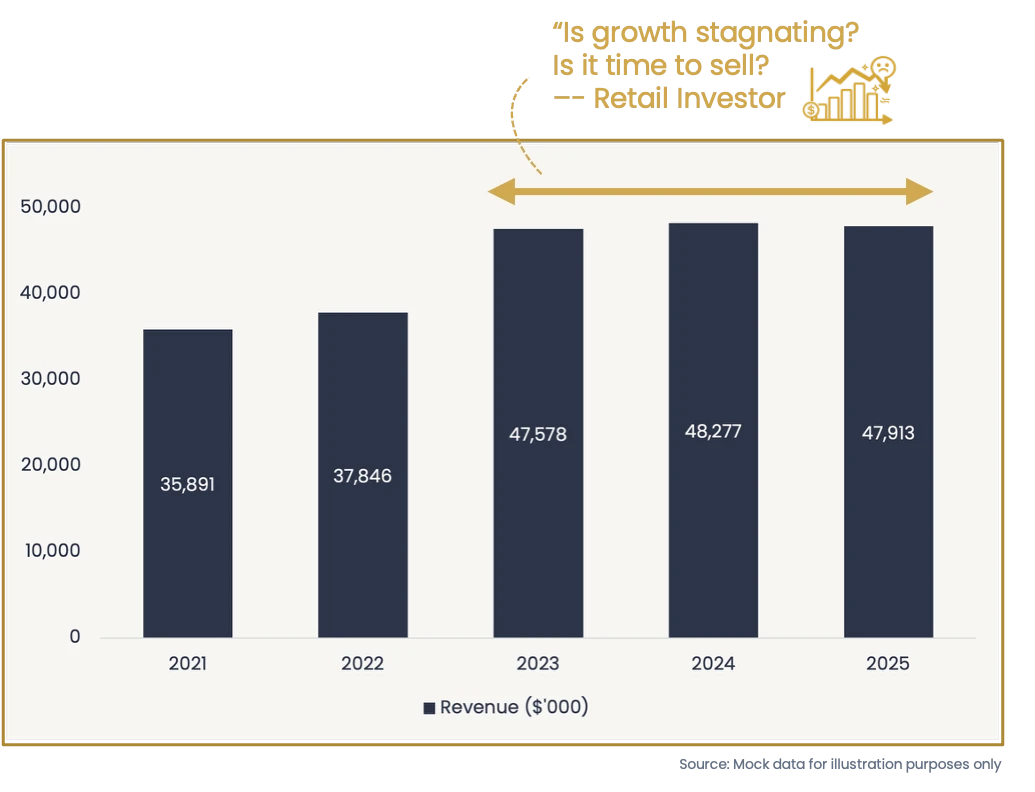
To: Celebrating the CAPEX EPS Boost
Call it a strategic diversion of funds aimed at redesigning Company Y’s operational architecture. The same CAPEX suppressing short-term revenue was, on the flip side, restructuring the cost base from the inside.
Net profit nearly doubled within a single year of implementation. Resulting from which, has been a stronger earnings per share (EPS) trajectory, built on something more durable than a growth sprint.
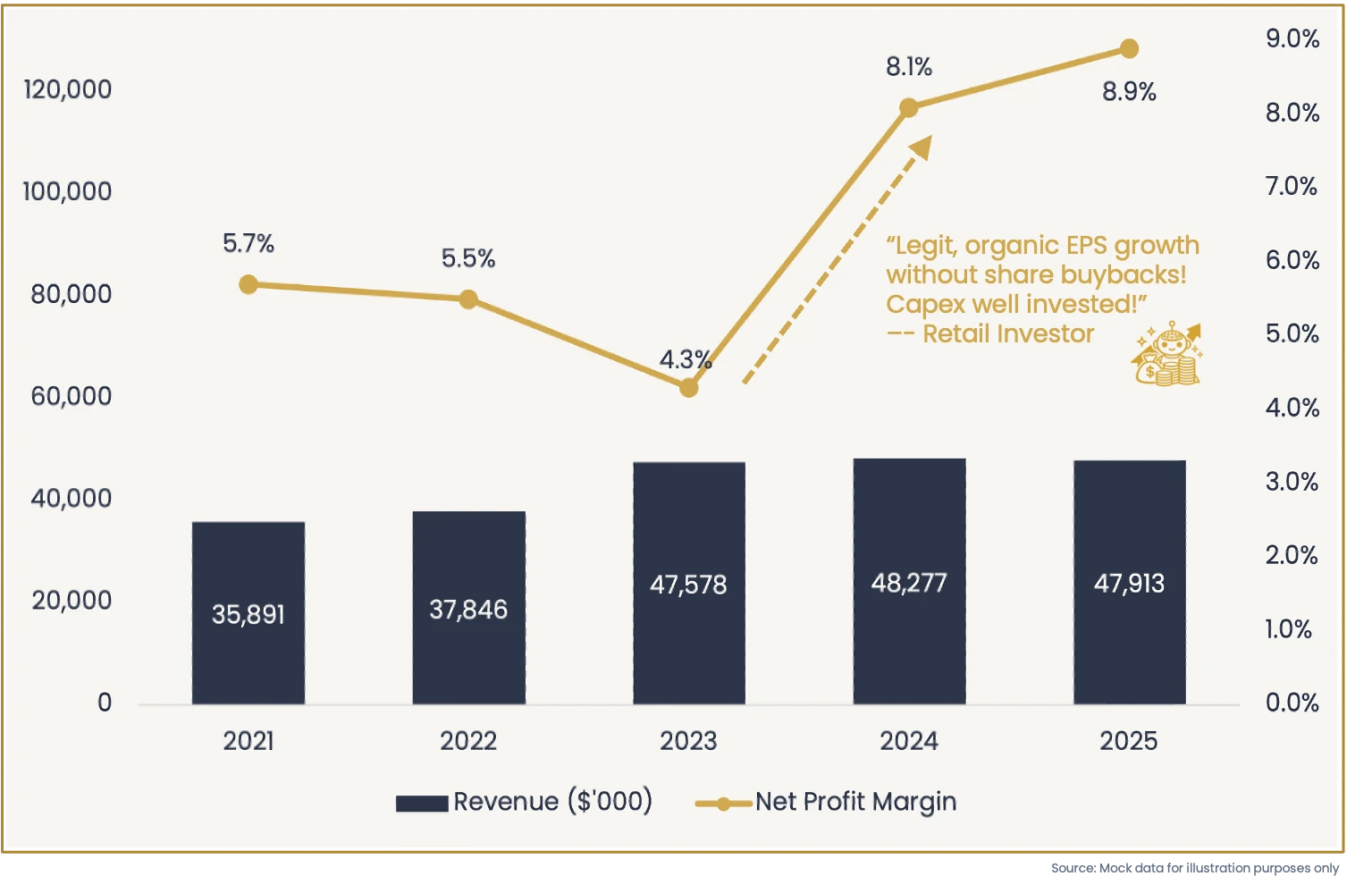
The Communication Imperative
Beyond the numbers, the real problem was centred on the narrative.
Company shareholders needed to understand what was happening, why it was happening, and what it meant for the value of their position over time.
Engagement and Creative Interpretation
Some further food for thought: What can a well-placed meme do that a chart can’t? It stops the scroll for young investors.
Used deliberately before the data-led argument begins, the meme arrests the shareholder’s attention on its own terms, making the formal net-profit narrative that follows easier to land and harder to dismiss.


+++