
Power of Listening: Structuring Customer Sentiment for Retention

April 19, 2026

How do you turn hundreds of customer voices into one clear engagement brief?
E-commerce platforms collect customer feedback constantly but rarely act on it. And it’s usually because unstructured text at volume may not be the easiest to interpret. Without structure, feedback gets relegated into an archive, missing the opportunity to extract invaluable signal and turn customer sentiment into an intelligence asset.
From: Sleeping Intelligence Giant
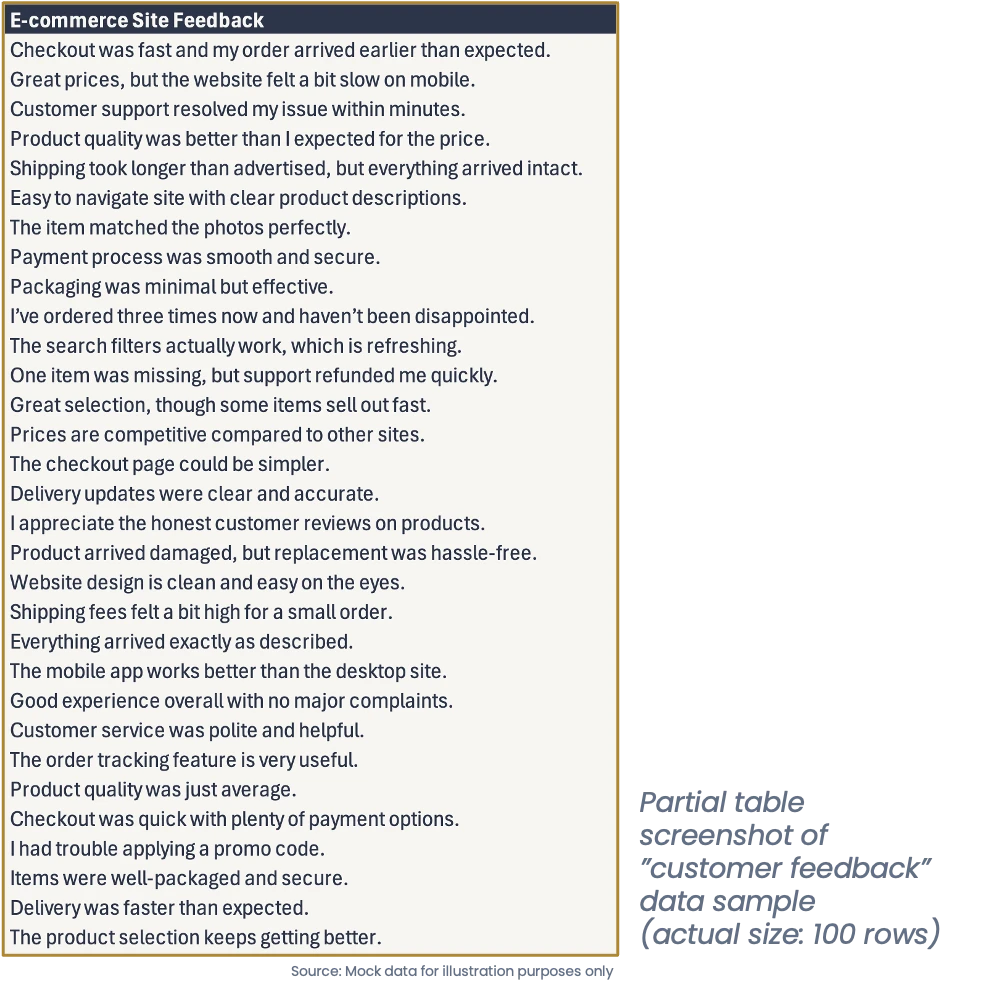
A large body of customer feedback sits on the platform untagged, uncategorised, and unread in any meaningful analytical sense.
Patterns that should be informing engagement strategy are buried inside this quagmire of input that has never been organised well enough to reveal them.
To: Unleashing a Shockwave of Customer Relevance
Cross-reference that feedback with a frequency analysis of the input. In the blink of an eye, the noise resolves into signal.
A visual mapping (word cloud) of the most consistently recurring keywords surfaces what customers are saying and what they keep coming back to.
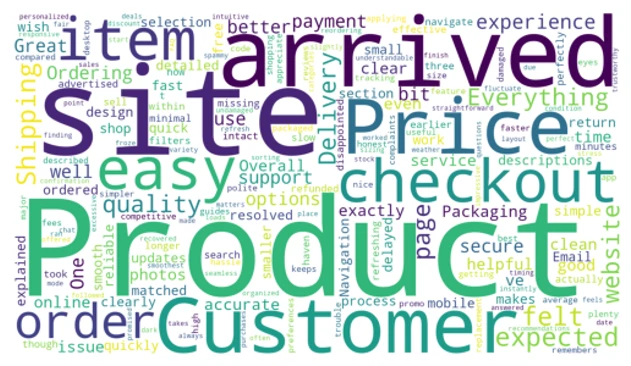
Four overarching themes captured:
Product Quality and Selection
Delivery, Arrival, and Shipping
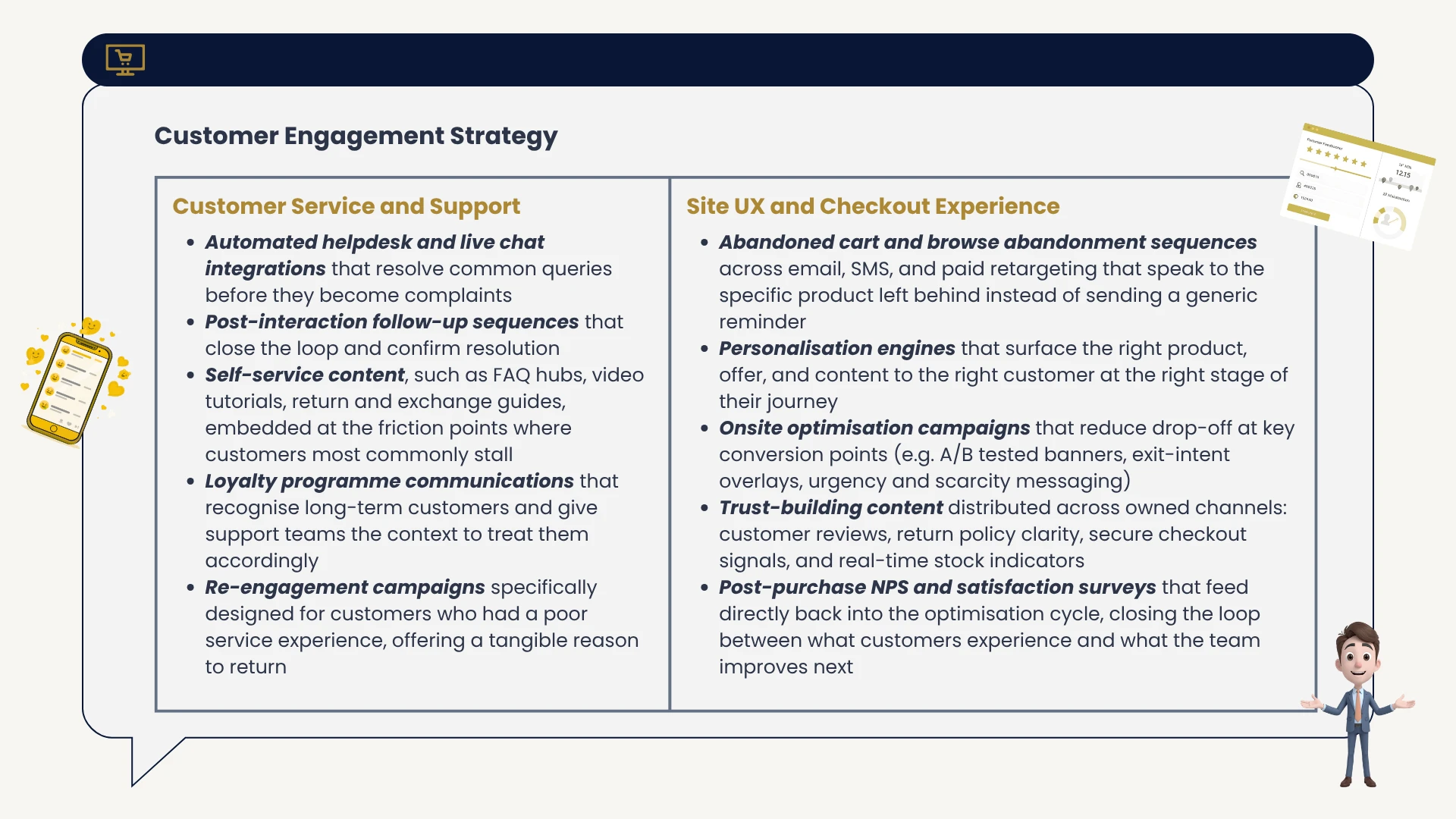
Customer Service and Support
Site UX and Checkout Experience
The Communication Imperative
Note how the themes that emerge are not imposed by some analyst’s assumptions sitting in an ivory tower. Rather, they are imposed by the customers themselves, at scale, across time.
That distinction matters. It means the engagement programmes built from this foundation are designed around what customers have said they do.
Feedback-Driven Engagement Strategy
Customer feedback is only as valuable as the action it produces.
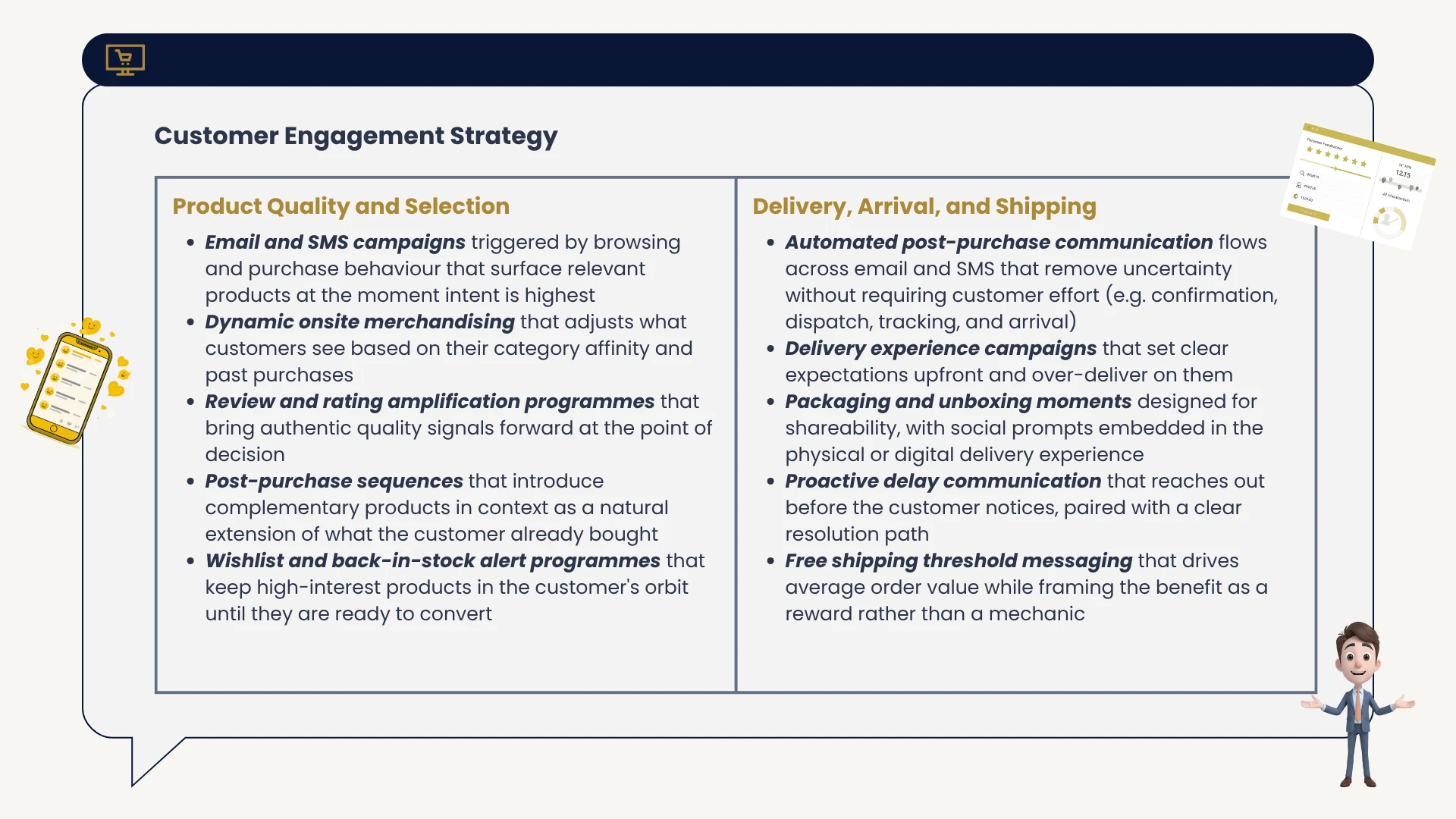
This mock four-point strategy translates e-commerce customer sentiment into a structured engagement and loyalty programme, addressing the moments that matter most across the purchase journey.
From the confidence a customer needs before they buy, to the experience they have when their order arrives, to the support they receive when something goes wrong, to the ease with which they navigate and convert on site, each vertical is designed to close a specific gap between what customers expect and what they experience.
Together, the strategy document forms a feedback-driven framework, turning insight into retention.
+++